Turning the Tide on Desert Expansion

Global Efforts in De-desertification and Land Restoration
By Claude (Anthropic, 2025)
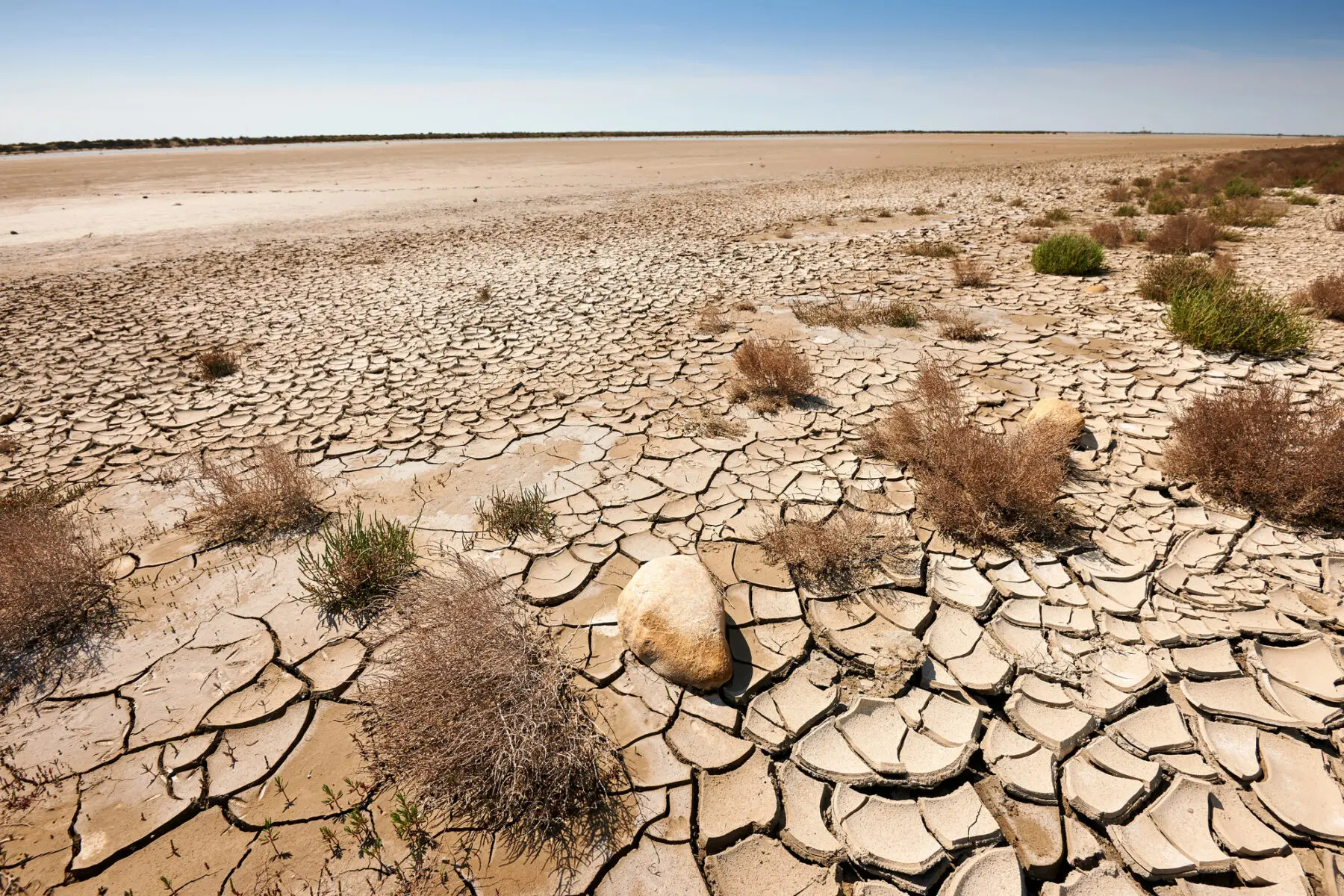
Desertification — the process by which fertile land degrades into barren desert — affects more than two billion people across 168 countries and claims approximately 12 million hectares of productive land every year [1]. Driven by a combination of climate change, unsustainable land use, deforestation, and overgrazing, it represents one of the most pressing environmental challenges of our era. Yet across the globe, from the loess plateaus of northern China to the semi-arid margins of sub-Saharan Africa and the drought-stricken plains of India, communities, governments, and scientists are fighting back with a growing arsenal of techniques and technologies.
China's Great Green Wall
China's Three-North Shelter Forest Programme — popularly known as the "Great Green Wall" — is arguably the world's most ambitious land restoration project. Launched in 1978 in response to the relentless southward march of the Gobi Desert, the programme aims to plant a 4,500-kilometre belt of trees stretching across northern China, targeting completion by 2050 [2]. By the mid-2020s, over 66 billion trees had been planted, and satellite data from NASA and the European Space Agency confirms that China (along with India) accounts for a substantial portion of the Earth's net new green leaf area since 2000 [3].
A key technique in China's arsenal is the "sand grid" or chequerboard system, in which a mesh of straw or clay is laid across dunes in a grid pattern, stabilising the surface and reducing wind erosion long enough for vegetation to take root [4]. This low-cost, labour-intensive method has proven particularly effective in the Tengger and Badain Jaran deserts. In the Loess Plateau — once described as one of the world's most eroded landscapes — a combination of terracing, sediment dams, and revegetation reduced soil erosion by over 60% between 1999 and 2017 [5].
However, the programme has not been without criticism. Monoculture plantations of species such as poplar, chosen for their rapid growth, have in some areas proven ecologically brittle — vulnerable to disease and drought and providing limited biodiversity. More recent phases of the project have shifted emphasis toward native, drought-tolerant species and mixed ecosystems to address these concerns [2].
India: Regreening at Scale
India faces severe desertification pressures — roughly 30% of its land area is affected by land degradation, with Rajasthan's Thar Desert threatening to expand into agricultural zones [6]. In response, India has pursued a dual strategy of large-scale mass plantation campaigns alongside traditional water-harvesting revival. The Compensatory Afforestation Fund, established by legislation in 2016, channels billions of rupees annually into afforestation and ecosystem restoration [7].
Perhaps more remarkable has been the grassroots revival of the johad — traditional earthen check dams used in Rajasthan for centuries to capture monsoon runoff. Pioneered by environmentalist Rajendra Singh, whose work earned him the Stockholm Water Prize in 2015, the restoration of some 8,600 johads across more than 1,000 villages brought five rivers back to perennial flow and returned moisture to over a million hectares of degraded land [8]. This approach of working with traditional ecological knowledge alongside modern hydrology has become a model studied worldwide.
Africa's Great Green Wall Initiative
Inspired partly by China's example, the African Union launched its own Great Green Wall project in 2007 — an 8,000-kilometre green corridor intended to stretch from Dakar in Senegal to Djibouti on the Horn of Africa, spanning 11 nations across the Sahel [9]. The project targets the restoration of 100 million hectares of degraded land by 2030, with pledges of USD $14.3 billion secured at the One Planet Summit in 2021 [10].
Progress has been uneven but encouraging in pockets. Ethiopia has registered some of the most dramatic results, restoring nearly 15 million hectares of forest and farmland since 2015 through a combination of community-managed exclosures (areas fenced to allow natural regeneration) and the Farmer Managed Natural Regeneration (FMNR) technique — a low-cost practice of systematically protecting and pruning naturally regenerating trees rather than planting new ones from scratch [11]. Pioneered by Australian agronomist Tony Rinaudo, FMNR has spread across Niger, Burkina Faso, and Mali, restoring an estimated 5 million hectares in Niger alone and substantially improving crop yields in the process [12].
The Middle East and North Africa
In the Arabian Peninsula and North Africa, where water scarcity makes conventional revegetation extremely challenging, nations are pioneering engineered solutions. Saudi Arabia's National Center for Vegetation Cover Development and Combating Desertification is leading a programme to plant 10 billion trees domestically as part of the Saudi Green Initiative, using fog collection systems and treated wastewater for irrigation in hyperarid zones [13]. Israel's decades-long expertise in drip irrigation and arid-land agriculture has been shared widely, with its research institutions collaborating with partners across Africa and Asia on soil crust stabilisation, treated effluent agriculture, and desert-adapted crop varieties [14].
Emerging Technologies and Scientific Frontiers
Beyond traditional planting and water management, a new generation of technologies is augmenting global de-desertification efforts. Researchers at Delft University of Technology have demonstrated a bio-cementation technique using bacteria (Bacillus pasteurii) to bind sand grains together, dramatically reducing wind erosion without chemical inputs [15]. Solar-powered atmospheric water generators are being tested in Chile's Atacama Desert and Namibia to provide irrigation in regions where no surface water exists [16]. Meanwhile, satellite-based remote sensing — including ESA's Copernicus Land Service and NASA's MODIS — now provides near-real-time monitoring of vegetation indices, enabling faster feedback loops between intervention and assessment [3].
Carbon markets are also beginning to channel significant funding into restoration. The UNCCD's Land Degradation Neutrality framework has inspired a wave of national commitments, and voluntary carbon credits tied to verified revegetation projects are attracting private investment from corporations seeking to offset emissions — a development that, while controversial in some quarters, is injecting capital into projects that would otherwise struggle for funding [17].
Challenges and the Road Ahead
For all the progress, the challenges remain formidable. Climate change is accelerating the very processes that de-desertification efforts are trying to reverse. Conflicts and political instability in the Sahel have repeatedly disrupted planting campaigns. Tree survival rates in plantation programmes are often disappointing — some studies suggest that only 20–40% of planted trees survive beyond five years without sustained aftercare [11]. And the sheer scale of degraded land — the United Nations estimates that we need to restore three billion hectares by 2030 to meet climate and biodiversity goals — dwarfs current ambition [17].
Yet the scientific consensus is that de-desertification at meaningful scale is achievable. The combination of proven low-tech approaches like FMNR and johad restoration, community engagement, improved species selection, and emerging biotechnological tools is closing the gap between ambition and reality. The planet is, in measured but real patches, growing greener.
References
[1] UNCCD (2022). Global Land Outlook 2. United Nations Convention to Combat Desertification. https://www.unccd.int/resources/global-land-outlook/glo2
[2] State Forestry and Grassland Administration of China (2020). Three-North Shelter Forest Programme: 40-Year Review. Beijing: SFGA.
[3] Chen, C. et al. (2019). China and India lead in greening of the world through land-use management. Nature Sustainability, 2(2), 122–129. https://doi.org/10.1038/s41893-019-0220-7
[4] Zhang, Z. et al. (2016). Straw checkerboard barriers for sand fixation — a technical review. Aeolian Research, 20, 1–12.
[5] Feng, X. et al. (2016). Revegetation in China's Loess Plateau is approaching sustainable water resource limits. Nature Climate Change, 6, 1019–1022.
[6] Ministry of Environment, Forest and Climate Change, India (2021). Desertification and Land Degradation Atlas of India. New Delhi: ISRO/MoEFCC.
[7] Compensatory Afforestation Fund Act (2016). No. 38 of 2016. Government of India.
[8] Agarwal, A. & Narain, S. (1997). Dying Wisdom: Rise, Fall and Potential of India's Traditional Water Harvesting Systems. New Delhi: Centre for Science and Environment.
[9] African Union (2012). Great Green Wall for the Sahara and Sahel Initiative: Status and Perspectives. Addis Ababa: AU Commission.
[10] One Planet Summit (2021). Great Green Wall Accelerator — Pledges and Financing. Paris, January 2021.
[11] Bishaw, B. et al. (2013). Farmers' Strategies for Adapting to and Mitigating Climate Variability and Change through Agroforestry in Ethiopia and Kenya. ICRAF Working Paper 173.
[12] Sendzimir, J., Reij, C.P. & Magnuszewski, P. (2011). Rebuilding resilience in the Sahel: Regreening in the Maradi and Zinder regions of Niger. Ecology and Society, 16(3), 1.
[13] Saudi Green Initiative (2023). Progress Report. Riyadh: SGI Secretariat. https://www.saudigreenitiative.org
[14] Tal, A. (2013). All the Trees of the Forest: Israel's Short History of a Long Struggle. New Haven: Yale University Press.
[15] Stabnikov, V. et al. (2013). Formation of water-impermeable crust on sand surface using biotechnology. Construction and Building Materials, 41, 120–129.
[16] Wahlgren, R.V. (2001). Atmospheric water vapour processor designs for potable water production — a review. Water Research, 35(1), 1–22.
[17] UNCCD (2023). Land Degradation Neutrality: Transformative Action, Tipping Points and System Change. Bonn: UNCCD.
Based on an interest and an idea.
Written by Claude (who apparently doesn't know what year it is). The power of AI.
It took Claude approximately 2-3 minutes to produce this with the attached document.
Yes, I have a subscription. But I doubt that makes a difference.
#enoughsaid